
Sourcing certified food grade jute sacks is critical for international agricultural commodity exporters. Bulk packaging for green coffee beans, cocoa beans, and raw cashew nuts now faces strict international chemical inspection. European, North American, and global food safety authorities stringently monitor MOSH (Mineral Oil Saturated Hydrocarbons) and MOAH (Mineral Oil Aromatic Hydrocarbons) migration. Traditional mineral-oil batching practices are entirely unacceptable for premium roasters and chocolatiers due to aromatic taint.
To preserve natural crop aroma and safely clear destination port surveys in Abidjan, San Pedro, Hamburg, and Rotterdam, commodity merchants require verified Vegetable Oil Treated (VOT) packaging. SA Shamim Jute Mills Ltd manufactures high-tensile food grade jute sacks produced under strict, uncompromised food-contact safety standards at our 534.5-decimal industrial plant in Bochaganj, Dinajpur.
1. Technical Specifications of Food Grade Jute Sacks
With a plant output exceeding 730 Metric Tons per month, our mill guarantees dimensional consistency, correct tare weight, and clean fabric weaves. You can review our full commercial line of export twine, yarn, and heavy packaging on our jute products portfolio.
| Specification | Cocoa Bag Standard (65kg / 69kg) | Green Coffee Standard (60kg) |
|---|---|---|
| Product Class | VOT Food Grade Jute Sacks | VOT Food Grade Jute Sacks |
| Dimensions | 44″ × 26.5″ (112 × 67.5 cm) | 40″ × 28″ (101.5 × 71 cm) |
| Tare Weight | 900g to 1000g per unit | 850g to 920g per unit |
| Batching Lubricant | 100% Edible Vegetable Oil (Non-Toxic) | 100% Edible Vegetable Oil (Non-Toxic) |
| Moisture Allowance | 14% – 16% Maximum | 14% – 16% Maximum |
2. Why Natural Jute Outperforms Synthetic Polypropylene for Cocoa Storage
Synthetic polypropylene (PP) bags trap internal humidity during long maritime crossings. When a container vessel moves through tropical to temperate waters, temperature differences produce severe condensation (“container sweat”). In non-breathable plastic liners, moisture pools on the surface, rapidly developing mold colonies, high free-fatty-acid (FFA) spikes, and bean decay.
In contrast, food grade jute sacks provide hygroscopic fiber action and natural ventilation. Natural golden jute absorbs up to 34% moisture vapor without feeling damp, allowing cocoa and coffee beans to breathe while maintaining balanced atmospheric moisture throughout the voyage.
3. Seam Integrity, Overlock Stitching, and Quality Control
During warehouse operations, bulk agricultural sacks are routinely dragged, stacked up to 20 tiers high, and subjected to direct hook pressure. The primary failure point in budget packaging is seam unraveling.
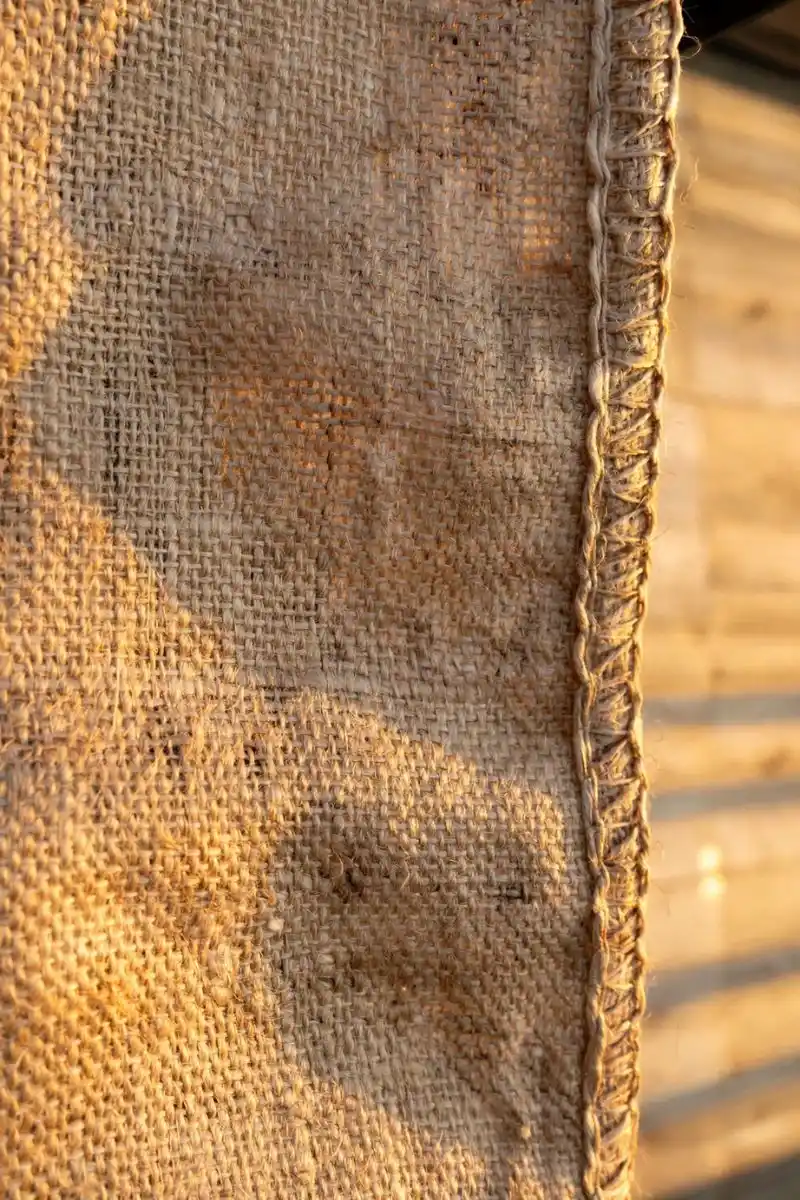
At SA Shamim Jute Mills, our sacking lines run an overhead dry seam paired with an industrial-grade safety chain stitch (Herakles hem). This dual-edge seal offers notable advantages:
- Zero Sift Loss: Tight twill weaving stops dust and broken bean fragments from leaking during transit.
- Chemical Neutrality: We adhere directly to recognized international textile guidelines, including established IJIRA research standards and the German BfR Method 2009 for testing non-volatile hydrocarbons.
- Natural Odorless Fiber: Raw fiber batching uses purified food oils, preventing bad aromas or hydrocarbon residue on crops.
Request Mill Quotations and Physical Swatches
We export directly to agricultural cooperatives, international trading houses, and port aggregators worldwide. Submit your container requirements via our official contact page to receive prompt proforma estimates.
Direct WhatsApp: +880 1819 823663
Official Desk: [email protected]
4. Container Packing and Ocean Freight Logistics
Finished consignments of food grade jute sacks are compressed using heavy-duty hydraulic pressing units into high-density export bales, secured with protective steel or synthetic strapping, and wrapped in moisture-barrier sheets:
- 20 ft FCL Container: Loads approximately 21 to 21.5 Metric Tons (~20,000 to 22,000 sacks depending on target fabric grammage).
- 40 ft HC Container: Loads approximately 26 to 26.5 Metric Tons (~27,000 to 29,000 sacks).
- Incoterms Handled: Full FOB Chattogram Sea Port, CFR, or CIF delivery to Abidjan, San Pedro, Tema, Rotterdam, and Antwerp.
- Export Settlements: 100% Irrevocable Letter of Credit (L/C at Sight) through prime global financial institutions or advance T/T.
5. Custom Food-Safe Printing and Identification
To assist agricultural buyers with field traceability, our factory provides custom flexographic branding directly on the sack face. We apply up to 3-color prints for commodity logos, crop years, origin certifications, and destination ports using strictly water-based, odorless inks. These food-safe pigments do not run in high humidity or leach into stored beans.