Global grain boards, cocoa exporters, coffee roasters, and agricultural wholesalers increasingly replace synthetic plastic packaging with sustainable jute bags manufactured from naturally biodegradable & breathable bast fiber. Operating since 2019 on a 6+ acre campus in Bochaganj, Dinajpur, SA Shamim Jute Mills Ltd converts regional raw jute across 352+ heavy machines to ship 1,000+ MT per month of VOT food-grade sacks, heavy B-Twill bags, hessian bags, and industrial jute yarns.
Why Global Commodity Buyers Choose Sustainable Jute Bags from Bangladesh
Modern bulk logistics demands packaging that performs under port crane hooks, container temperature swings, and strict environmental import regulations. Synthetic polypropylene sacks trap residual heat and moisture inside closed shipping containers, triggering mold growth on raw agricultural commodities. By contrast, sustainable jute bags allow continuous micro-ventilation through their interlacing warp and weft threads while maintaining high tear resistance under 50 kg to 100 kg loads.
Bangladesh sits at the center of world bast fiber manufacturing because fertile alluvial soils across Dinajpur and Rangpur Division yield long-staple Tossa (Corchorus olitorius) and White (Corchorus capsularis) jute. Sourcing directly from SA Shamim Jute Mills Ltd gives importers factory-direct pricing, consistent GSM tolerances, and dedicated export container scheduling without trading-house markups.
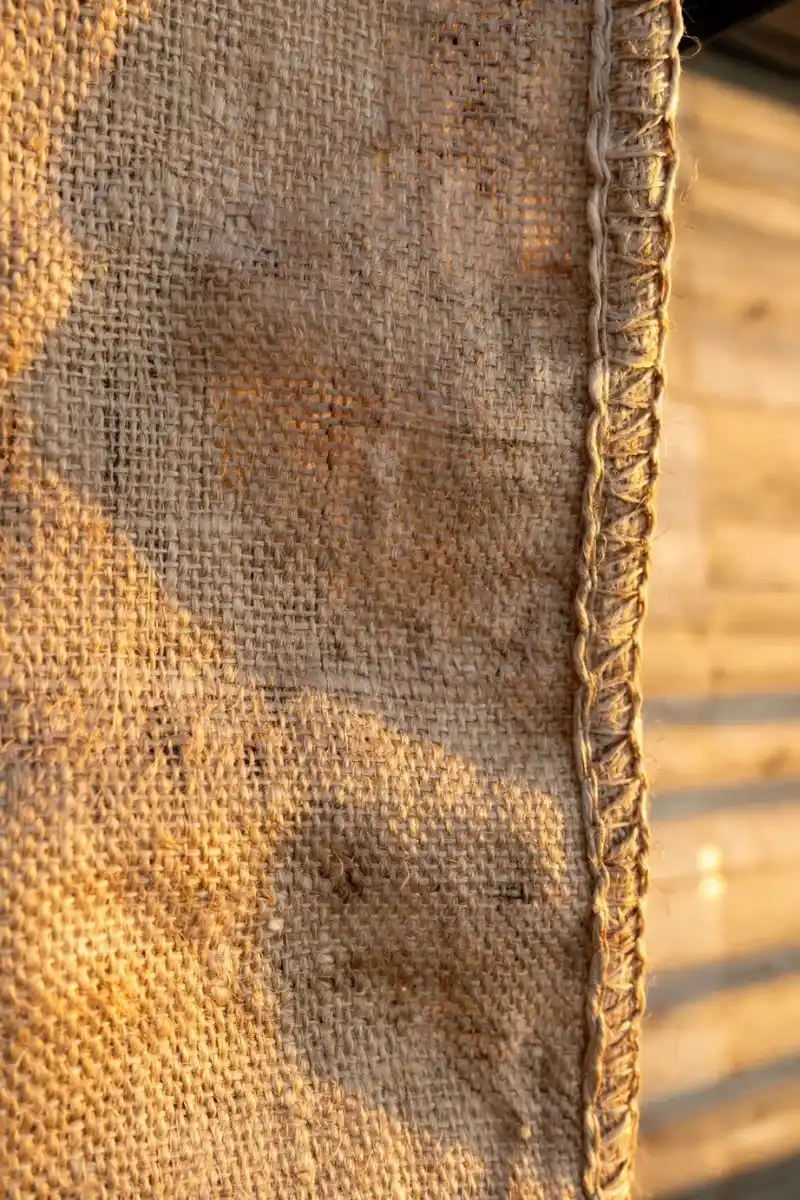
Four Industrial Product Lines Behind Our Sustainable Jute Bags
Industrial procurement officers do not buy generic bags—they specify exact fiber weights, stitch densities, and weave constructions tailored to automated bagging lines or manual port stevedoring. At SA Shamim Jute Mills Ltd, our manufacturing floor covers four core export lines under HS Codes 6305.10, 5310, and 5307.
Food-Grade Low-MOH Cocoa & Coffee Sacks
Engineered via Vegetable Oil Treated (VOT) processing for 65 kg and 69 kg cocoa beans (Côte d’Ivoire, Ghana), 60 kg green coffee beans, nuts, and food grains requiring low hydrocarbon migration.
Heavy Jute Sacking (B-Twill & Binola)
Heavy-duty B-Twill (1020g, triple blue stripes, 44" × 26.5"), Binola (907g), A-Twill, Kat Binola, L-Twill, Heavy & Light Cees, and Double Warp (D.W.) flour sacks built for grain, sugar, and pulses.
Hessian Burlap Bags & Continuous Cloth
Lighter plain-weave hessian sacks and continuous burlap rolls from 22" to 72" widths and 5 oz to 14 oz (150 to 450 GSM) weights for potatoes, onions, nursery root-balls, and converters.
Industrial Jute Yarn & Bag-Closing Twine
Precision single-ply to 4-ply yarns from 8 lbs to 28 lbs in CRM, CRT, CRX, and CB grades—supplying high-speed Turkish/EU carpet backing looms and automated sack-closing lines.
| Bag Specification | Standard Size & Weight | Primary Export Applications |
|---|---|---|
| VOT Cocoa Bean Bag | 65 kg / 69 kg capacity; Vegetable Oil Treated | West African cocoa exports (Côte d’Ivoire, Ghana, EU ports) |
| VOT Coffee Bean Sack | 60 kg standard capacity; breathable plain weave | Green coffee exports (Latin America, East Africa, Germany, NL) |
| Standard B-Twill Sack | 44" × 26.5" (112 × 67 cm), 1020g, triple blue stripes | Bulk rice, wheat, maize, sugar & government grain reserves |
| Binola & D.W. Sacks | 907g Binola; custom Double Warp flour sizing | Milled flour, oilseeds, pulses & heavy agricultural trade |
| Hessian Burlap Bags | 5 oz to 14 oz (150–450 GSM), custom dimensions | Root vegetables, sandbags, horticultural & industrial packaging |
Environmental Value & Vegetable Oil Treated (VOT) Food-Contact Safety
From an ecological standpoint, raw jute grows to maturity in roughly 120 days largely on monsoon rainfall, absorbs significant atmospheric carbon dioxide, and enriches topsoil for subsequent rice harvests through fallen leaves. When retired from service, unbleached sustainable jute bags break down naturally in soil without releasing synthetic microplastics into waterways or farmland.
However, eco-friendly fiber alone is not enough for European cocoa and coffee importers. Legacy jute mills historically softened raw fibers using petroleum-derived mineral batching oils—which can leave mineral oil saturated hydrocarbons (MOSH) and mineral oil aromatic hydrocarbons (MOAH) residues in sensitive food beans. At SA Shamim Jute Mills Ltd, our dedicated food-grade jute bag export lines substitute mineral oils with food-safe vegetable oils aligned with German BfR Method 2009 (SPE-GC-FID) MOSH/MOAH screening—our latest IJIRA analytical test report is available on request for buyer technical verification.
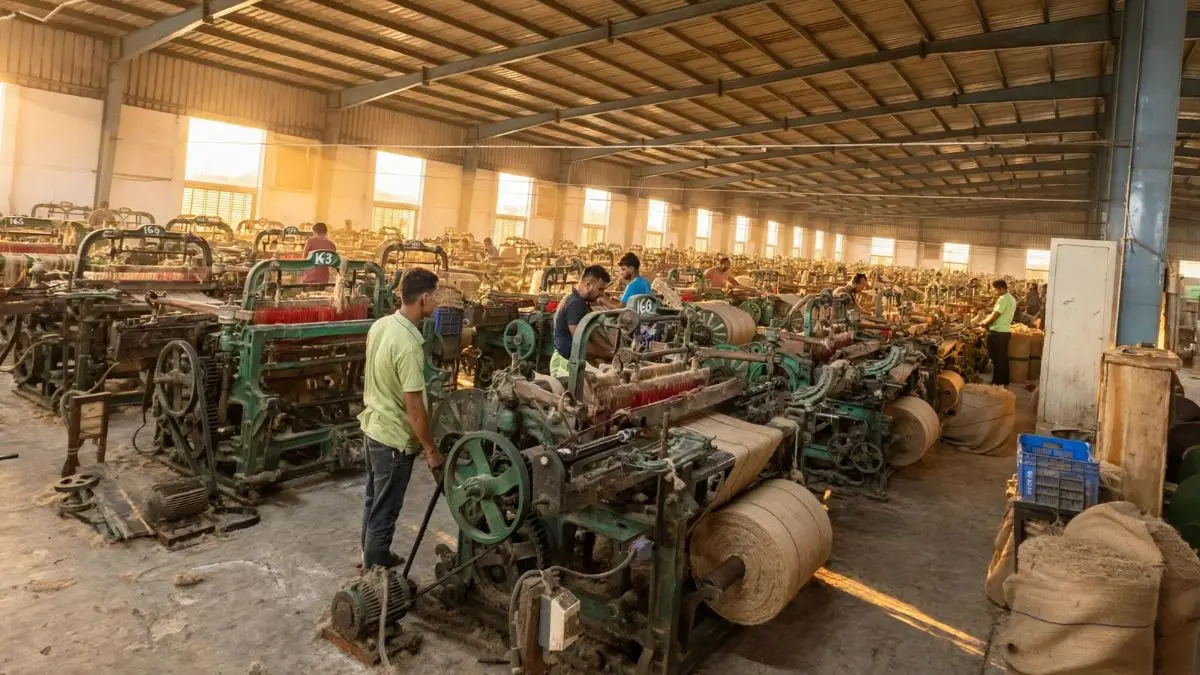
Inside Our Dinajpur Mill: Quality Control Across 352+ Machines
Located at Batason, Muraripur, Post: Setabganj-5216, Upazila: Bochaganj, District: Dinajpur in Rangpur Division, our factory operates integrated softening, breaker and finisher carding, drawing, flyer spinning, rapier and cop-change weaving, calendering, stitching, and hydraulic baling lines. Because we do not outsource weaving or stitching to unmonitored third-party workshops, buyer specifications remain locked across entire vessel lots.
- Raw Fiber Selection & Moisture Control: Fresh regional Tossa and White jute bales are graded for tensile strength, cleanliness, and controlled moisture content prior to softening.
- Dedicated Batching Segregation: VOT food-grade lines run strictly separated from conventional sacking emulsions to prevent cross-contamination of mineral hydrocarbons.
- Calibrating Weave & Seam Strength: Loom tension, porter-shot density, bag weight (grams per bag), and Herakles or safety-stitch seam strength are verified hourly by mill supervisors.
- Custom Stenciling & Hydraulic Baling: Buyers can request multi-color stenciled exporter marks, lot numbers, or striped patterns before bags are compressed into 200–500 piece steel-strapped hydraulic export bales.
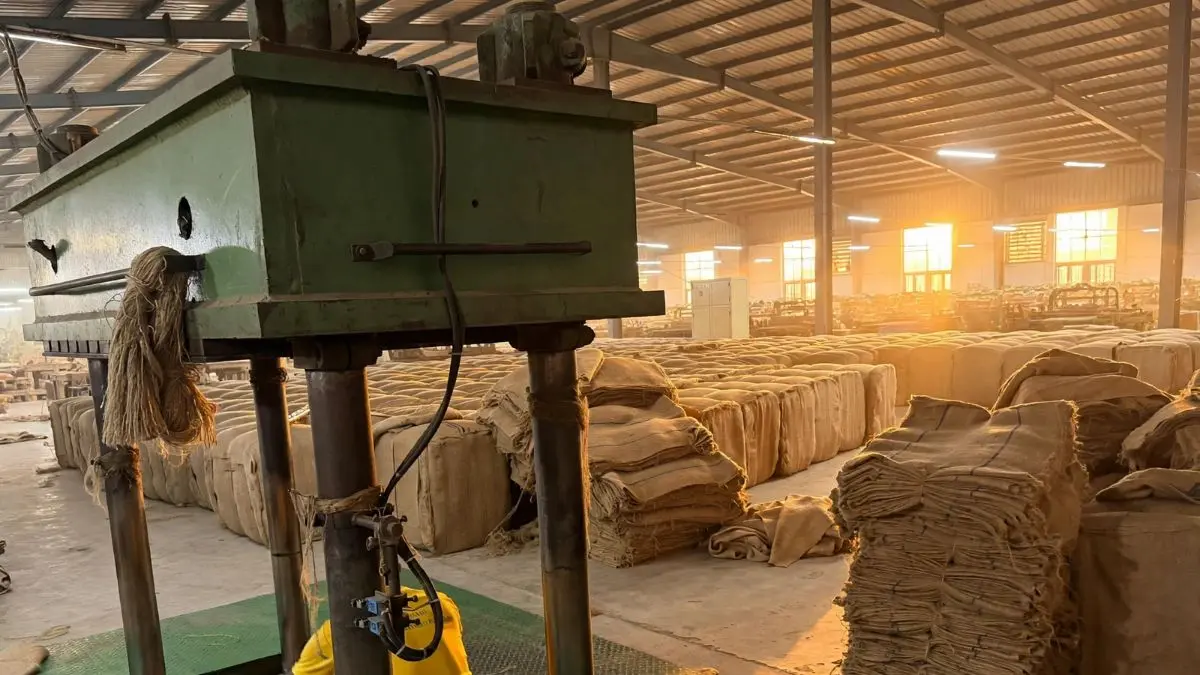
Container Logistics, Trade Terms & Verified Mill Credentials
Efficient port execution matters as much as loom accuracy. Whether your procurement desk imports containerloads of sustainable jute bags into Rotterdam, Hamburg, Antwerp, Mersin, Abidjan, Tema, Port Sudan, Jebel Ali, or Houston, our export logistics team prepares complete commercial invoices, packing lists, certificates of origin, phytosanitary certificates, and third-party inspection clearances.
| Trade Parameter | Standard Mill Provision | Optional Buyer Flexibility |
|---|---|---|
| Container Stuffing | 20′ Dry FCL: ~21 MT (200–500 bags/bale) | 40′ FCL / High Cube: ~26 MT packed in hydraulic bales |
| Ports of Dispatch | Chattogram Sea Port (UN/LOCODE: BDCGP) | Land Customs: Benapole, Sona Masjid, Bhomra, Banglabandha |
| Incoterms & Payment | All 11 Incoterms 2020 (EXW, FOB, CIF, DDP, etc.) | 100% Irrevocable L/C at Sight, Advance T/T, CAD/DP, D/A |
| Inspection & Samples | Free physical bag samples (buyer pays DHL/FedEx) | SGS, Intertek, or Federal Inspection Services (FIS) audit |
Verify official company profile on the Export Promotion Bureau (EPB) Portal.
Active factory license under Department of Inspection for Factories and Establishments.
Registered Bangladeshi exporter and member of Bangladesh Jute Mills Association.
Inspect verified factory listing on Bangladesh Export Directory.
Download Corporate Export Dossier (PDF)
Access machinery counts, product specification tables, Dinajpur factory capacity metrics, and statutory export registrations in one PDF.
Frequently Asked Questions About Sustainable Jute Bags
What makes SA Shamim Jute Mills Ltd’s sustainable jute bags suitable for food exports?
Our food-grade sustainable jute bags are manufactured on segregated Vegetable Oil Treated (VOT) lines that replace mineral batching oils with vegetable oils. They align with German BfR Method 2009 (SPE-GC-FID) MOSH/MOAH screening for cocoa, coffee, hazelnuts, and export grains—with our latest IJIRA analytical test report available on request.
What are the standard dimensions and weights for B-Twill, Binola, and Cocoa sacks?
Standard B-Twill sacking bags measure 44" × 26.5" at 1020g with triple blue identification stripes, while Binola sacks weigh 907g. For cocoa and coffee exporters, we manufacture 65 kg and 69 kg cocoa sacks and 60 kg green coffee sacks alongside custom hessian and Double Warp (D.W.) flour bag dimensions.
Can importers order custom logo printing and custom bale quantities?
Yes. We customize bag dimensions, GSM weight, stitch types, and custom multi-color stenciled exporter marks or commodity branding on our sustainable jute bags. Finished sacks are compressed into steel-strapped hydraulic bales holding 200 to 500 bags per bale based on buyer port handling requirements.
How are shipments inspected and shipped from Bangladesh?
We ship approximately 21 MT per 20-foot Dry FCL and 26 MT per 40-foot FCL/HC via Chattogram Sea Port (BDCGP) or Bangladeshi land customs ports (Benapole, Sona Masjid, Bhomra, Banglabandha). Buyers may nominate SGS, Intertek, or Federal Inspection Services (FIS) for independent pre-shipment audits.
How can overseas buyers request physical mill samples before ordering?
We provide free physical mill samples of our VOT cocoa/coffee bags, B-Twill sacks, hessian bags, or yarn spools so your quality lab can inspect weave and stitch integrity firsthand. Buyers simply cover international DHL or FedEx courier freight from Dinajpur.
Request Direct Mill Pricing for Sustainable Jute Bags
Work directly with SA Shamim Jute Mills Ltd (Established 2019) for 1,000+ MT/month export capacity, VOT food-grade compliance, and reliable container dispatch from Bangladesh.