Global commodity boards and agricultural shippers adopt industrial jute bags to eliminate microplastic shedding, container sweating, and single-use plastic waste taxes. Exporting since 2019 from a 6+ acre Dinajpur campus, SA Shamim Jute Mills Ltd runs 352+ heavy machines and 1,100+ staff to deliver 1,000+ MT monthly across VOT food-grade sacks, heavy sacking, yarn, and hessian cloth.
Why Global Shippers Replace Single-Use Plastics with Industrial Jute Bags
Single-use woven polypropylene sacks trap warm moisture inside shipping containers and shed microplastic filaments during grain and bean unloading. Switching to industrial jute bags protects cargo dryness through naturally biodegradable and breathable bast fiber while helping importers satisfy national packaging-waste mandates.
Conventional petrochemical plastic bags are derived from non-renewable feedstocks, resist natural breakdown in soil, and present high recycling contamination when soiled by agricultural dust. In contrast, Corchorus bast crops grow on low-input seasonal rainfall requiring minimal synthetic pesticides or fertilizers—yielding renewable raw fiber that spins and weaves into durable jute bags built for multi-trip commodity handling.
Beyond soil breakdown, operational warehousing favors natural bast sacks. Because woven jute bags have high surface friction and resealable fiber pores, steel stevedore hooks pull into weave intersections without tearing open entire side panels—a critical advantage over split-tape polypropylene. Explore our Dinajpur factory operations on the SA Shamim Jute Mills Ltd homepage.
| Lifecycle Factor | Industrial Jute Bags | Woven Polypropylene (PP) Sacks |
|---|---|---|
| Condensation Control | Naturally biodegradable & breathable bast fiber vents container heat and humidity. | Impermeable film traps warm vapor inside cargo holds, raising mold spoilage risk. |
| Contamination Risk | Natural plant fiber avoids shedding persistent synthetic microplastics into grains or beans. | Fibrillated plastic tapes fray under UV exposure and mechanical abrasion. |
| Pallet Stack Grip | Coarse natural weave resists sliding on high warehouse stacks without plastic wrap. | Smooth polymer surface slides easily during sea vessel roll and forklift turns. |
| End-of-Life Pathway | Decomposes organically after multi-cycle agricultural reuse. | Requires energy-intensive collection; accumulates in landfills when dust-soiled. |
Stevedore Hook Durability
Tightly woven rectangular bases and reinforced safety seams let jute bags absorb dock hook stress without catastrophic seam rupture.
Regulatory Plastic Compliance
Adopting natural bast sacking reduces exposure to single-use plastic packaging fees across European, Turkish, African, and Middle Eastern import terminals.
Standardized Jute Bags & Upstream Export Lines from Dinajpur
SA Shamim Jute Mills Ltd manufactures standardized heavy sacking and food-grade jute bags alongside industrial yarns and hessian burlap rolls. Every product runs across HS 6305.10, HS 5307, and HS 5310 inside our 6+ acre Dinajpur factory.
| Export Line | HS Code | Verified Dinajpur Specs | Primary Buyer Uses |
|---|---|---|---|
| Food-Grade Low-MOH Jute Sacks | HS 6305.10 | Vegetable Oil Treated (VOT) processing; 65kg/69kg Cocoa sacks, 60kg Coffee sacks, and Grain sacks. | Cocoa & coffee shipping in Côte d’Ivoire, Ghana, Latin America & EU roasters. |
| Heavy Jute Sacking Bags | HS 6305.10 | Standard B-Twill (1020g, triple blue stripes, 44"x26.5"), Binola (907g), A-Twill, Kat Binola, L-Twill, Heavy & Light Cees, Double Warp (D.W.) Flour Sacks. | Bulk rice, wheat, sugar, pulses, flour, and national commodity warehousing. |
| Hessian Cloth & Burlap | HS 5310 | 22" to 72" width; 5 oz to 14 oz (150 to 450 GSM) plain weave in continuous rolls & hydraulic bales. | Upstream fabric for bag converters, nursery wrap & concrete curing. |
| Industrial Jute Yarn & Twine | HS 5307 | 8 lbs to 28 lbs (1 to 4 ply) in CRM, CRT, CRX, and CB grades wound on export spools. | Carpet backing weaving (Turkey, EU), industrial cordage & bag closing. |
Commodity importers transition bulk shipments smoothly by ordering B-Twill and Binola jute bags through our jute products manufacturing line, while cocoa and green coffee cooperatives secure low-hydrocarbon sacks via our food-grade jute bags export program.
Downstream regional bag stitchers replacing plastic carry sacks also buy raw yardage from our hessian cloth manufacturer in Bangladesh division. By exporting 22" to 72" burlap rolls (150 to 450 GSM) and 8 lbs to 28 lbs CRM, CRT, CRX, and CB yarns directly from Dinajpur, we equip commercial converters worldwide to produce customized jute bags and woven industrial fabrics without relying on synthetic polymers.
VOT Processing & Dinajpur Mill Scale (Since 2019)
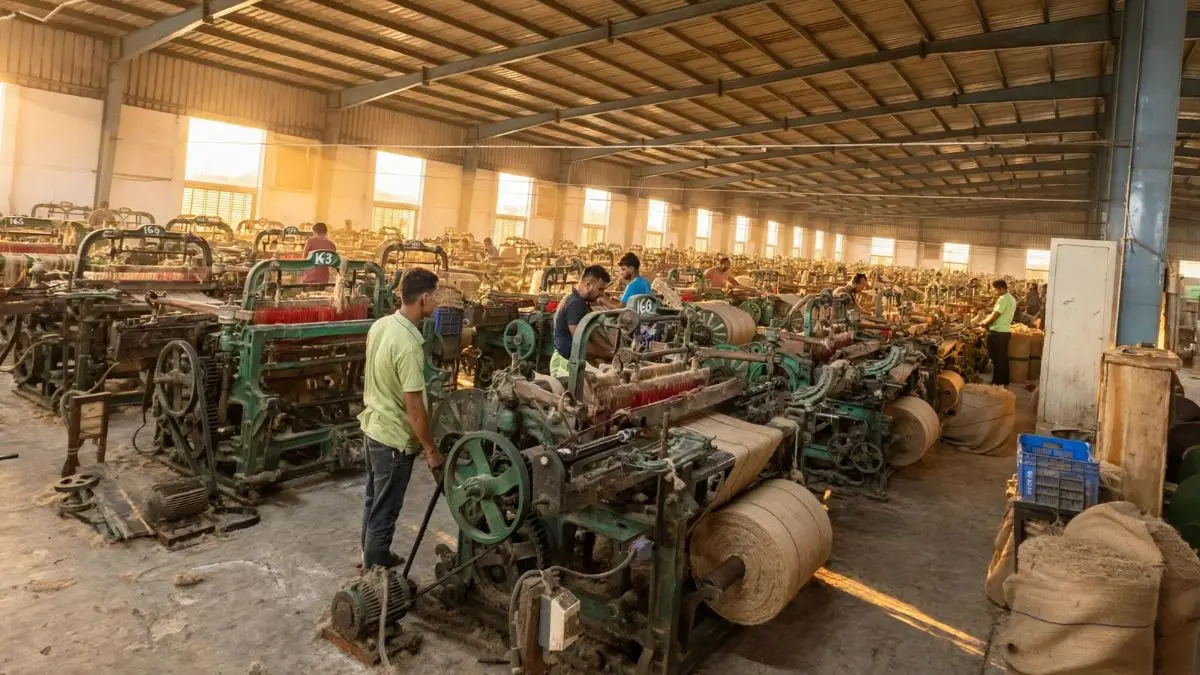
Operating since 2019 under Founder & Managing Director Shamim Akhter Hossain, SA Shamim Jute Mills Ltd runs 352+ heavy machines and 1,100+ skilled personnel on uninterrupted captive power. Every food-grade batch of jute bags uses Vegetable Oil Treated (VOT) softening to prevent mineral oil transfer.
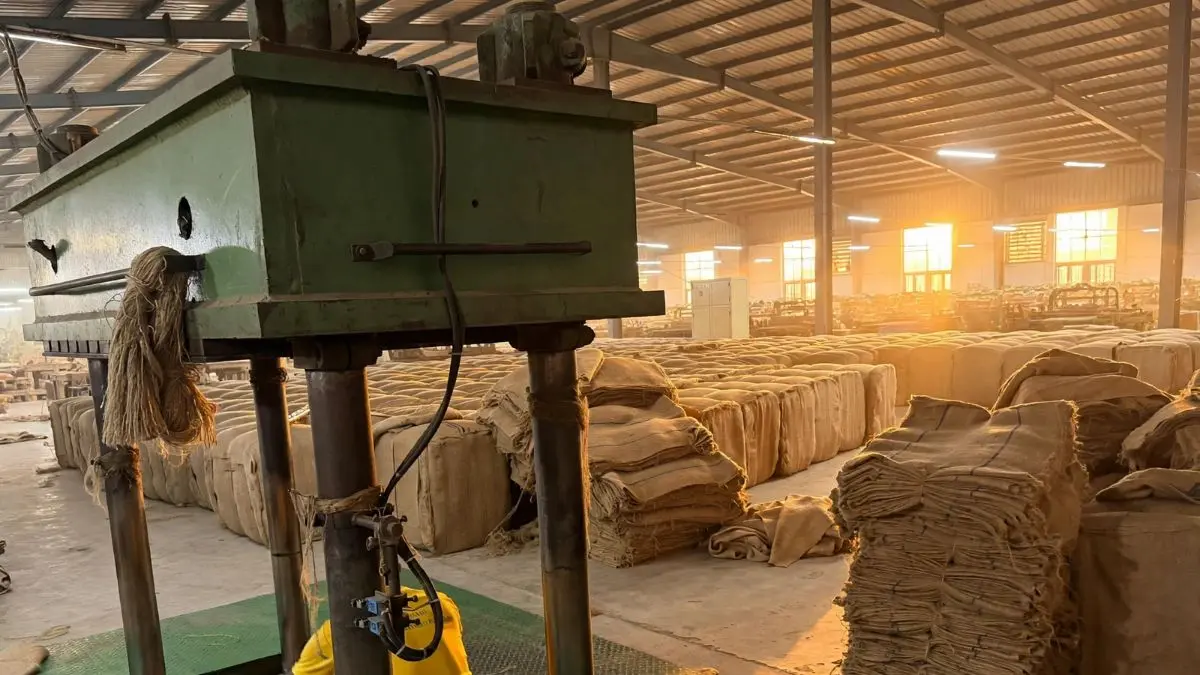
Located at Batason, Muraripur, Post: Setabganj-5216, Bochaganj, Dinajpur (534.5 decimals / 6+ acres), our integrated campus keeps softening, breaker and finisher carding, drawing, flyer spinning, rapier and cop-change weaving, calendering, stitching, and hydraulic baling under one roof. On dedicated food-grade lines, replacing conventional mineral oil with VOT processing keeps production aligned with German BfR Method 2009 (SPE-GC-FID) MOSH/MOAH screening—with our latest IJIRA analytical test report available on request. Buyers can also appoint SGS, Intertek, or Federal Inspection Services (FIS) to audit every lot prior to dispatch.
Statutory Factory Licenses & Government Export Registries
International buyers transitioning annual contracts from plastic to jute bags verify factory safety and export credentials first. SA Shamim Jute Mills Ltd maintains active registrations with Bangladesh’s labour inspectorate, Export Promotion Bureau, and BJMA.
DIFE Registered Factory
DIFE Registered Factory (License No: 27-21-1-056-00001, Ministry of Labour & Employment), confirming industrial safety and statutory compliance across our 1,100+ staff.
EPB Exporter ID #1968
Verify our active government export standing directly on the Export Promotion Bureau (EPB) Directory.
Bangladesh Export Directory
Review our verified manufacturing profile via the Bangladesh Export Trade Directory.
ERC & BJMA Standing
Active Export Registration Certificate (ERC) holder and member of the Bangladesh Jute Mills Association (BJMA) authorized for direct global L/C settlements.
Corporate Profile & Export Specification Dossier (PDF)
Download container stuffing tables, 352+ machine schedules, and factory credentials for transitioning to Dinajpur jute bags.
Container Stuffing, Ports & Incoterms 2020
SA Shamim Jute Mills Ltd exports compressed bales through Chattogram Sea Port (UN/LOCODE: BDCGP) and four Bangladesh land customs stations. We execute FCL shipments under all 11 Incoterms 2020 and established international bank payment methods.
| Export Logistics Parameter | SA Shamim Jute Mills Ltd Standard |
|---|---|
| Container Stuffing | 20′ Dry FCL (~21 MT / 200–500 bags per bale) | 40′ FCL/HC (~26 MT). |
| Sea & Land Ports | Chattogram Sea Port (UN/LOCODE: BDCGP) & Land Customs Ports: Benapole, Sona Masjid, Bhomra, Banglabandha. |
| Incoterms 2020 | All 11 terms: EXW, FCA, FOB, CFR, CIF, CPT, CIP, DAP, DPU, DDP, FAS. |
| Payment Terms | 100% Irrevocable L/C at Sight, Advance T/T, CAD/DP, and D/A for approved contracts. |
| Physical Samples | Free physical samples available on request for lab and weave checks (buyer covers DHL/FedEx freight). |
| Export Markets | Turkey, Germany, Netherlands, UK, USA, Côte d’Ivoire, Ghana, Sudan, UAE, Oman, Saudi Arabia, Latin America. |
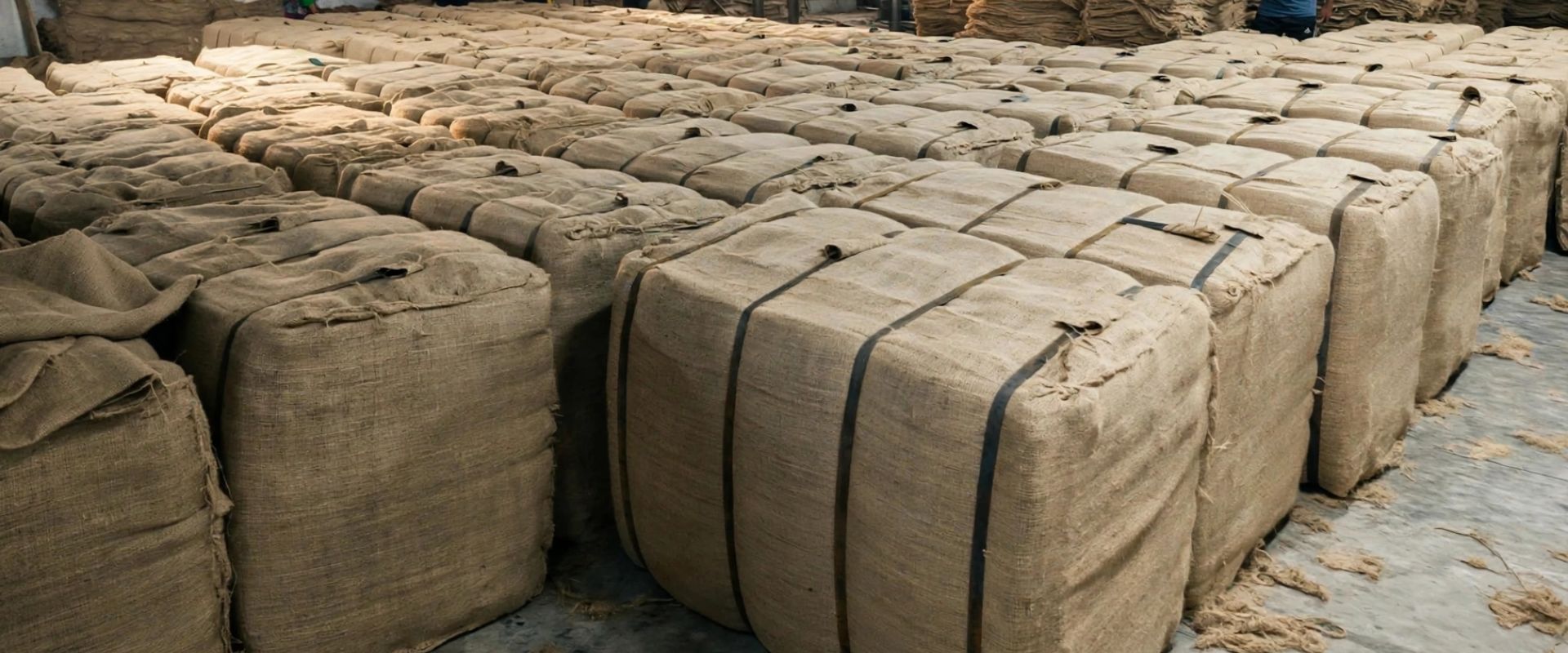
By compressing 200–500 finished jute bags per steel-strapped hydraulic bale, our logistics team maximizes container tonnage across shipping routes to Europe, West Africa, the Middle East, Turkey, and Latin America—keeping natural-fiber sacking cost-competitive against synthetic alternatives.
Procurement FAQs on Replacing Plastic Sacks with Jute Bags
Importers switching from polypropylene to natural bast packaging regularly confirm moisture performance, food-grade oil compliance, and container minimums. These concise answers cover direct mill terms at SA Shamim Jute Mills Ltd.
Why do agricultural buyers replace woven plastic sacks with jute bags?
Naturally biodegradable and breathable bast fiber allows warm agricultural cargo to vent moisture during ocean transit, prevents microplastic shedding, and holds superior pallet-stack friction compared to slick polypropylene.
What is the minimum order quantity (MOQ) at SA Shamim Jute Mills Ltd?
Standard export orders start at one 20′ Dry FCL container (approximately 21 MT, packed 200–500 bags per hydraulic bale). Mixed container configurations across B-Twill, Binola, VOT sacks, or hessian rolls can be arranged.
How do you ensure food-grade safety for cocoa and coffee shipments?
Our 65kg/69kg cocoa and 60kg coffee bags are manufactured on dedicated Vegetable Oil Treated (VOT) lines aligned with German BfR Method 2009 (SPE-GC-FID) MOSH/MOAH screening—with our latest IJIRA analytical test report available on request.
Which third-party inspection agencies and payment methods are accepted?
Buyers may appoint SGS, Intertek, or Federal Inspection Services (FIS) for factory pre-shipment inspections, and settle orders via 100% Irrevocable L/C at Sight, Advance T/T, CAD/DP, or D/A across all 11 Incoterms 2020.
How can importers test physical samples before placing a container order?
Free physical sack, hessian cloth, and yarn samples are available on request directly from Dinajpur; buyers only cover DHL or FedEx courier freight.
Transition Your Supply Chain to Mill-Direct Jute Bags from Dinajpur
Contact our export desk for FOB Chattogram or CIF destination container quotes, IJIRA test documentation, or physical samples backed by 352+ machines and 1,000+ MT monthly output.